
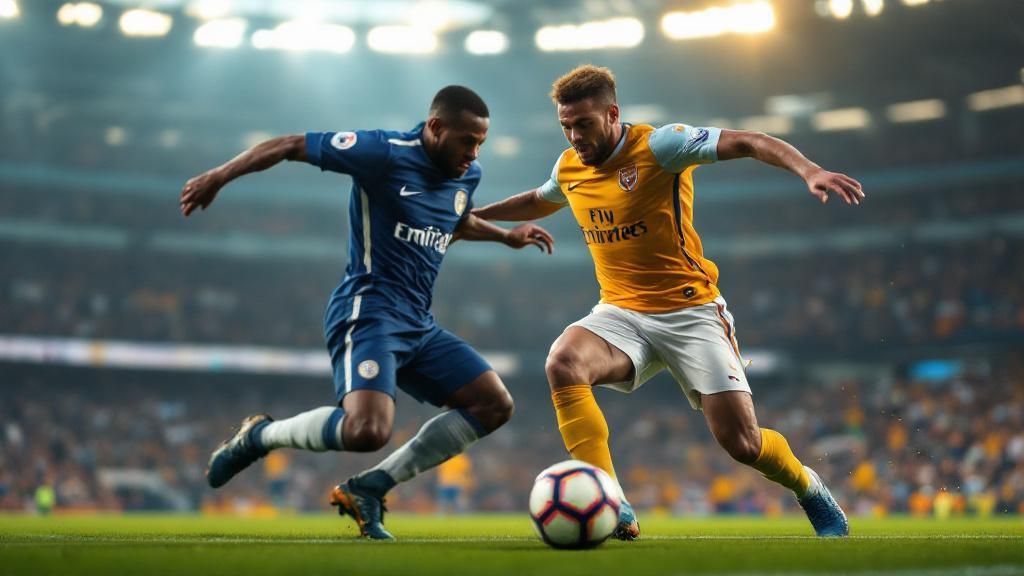
The art of flank play has seen a notable transformation in modern football, yet the thrill of watching elite wide players weave through defences remains as compelling as always. Whilst the classic winger’s duties has evolved significantly from the days of staying firmly positioned wide in a 4-4-2 formation, today’s finest practitioners operate as dynamic attacking threats within front-three systems, tasked with either hitting the byeline or shifting centrally on their preferred foot to create scoring chances. This week, BBC Sport has identified the ten most thrilling flank operators playing in the sport—those performers in exceptional form, continually supplying goals, assists and mesmerising dribbles that lift supporters from their seats. From emerging stars commanding eye-watering transfer fees to established internationals transforming their duties, these are the game’s most electrifying players operating in wide areas.
The Development of Wingers in Contemporary Football
The role of the winger has experienced a fundamental change in tactical philosophy over the past two decades. Where once wingers were required to hug the touchline religiously, providing width and delivering crosses from deep positions, the modern game demands considerably more adaptability and tactical awareness from players operating on the flanks. Modern top-level wingers operate within compact front-three systems, demanding they be equally comfortable moving infield onto their preferred foot as they are staying close to the sideline. This tactical flexibility has converted wingers from straightforward providers into genuine goal-scoring threats in their own right, fundamentally altering how attacking play is built at the highest level.
Pat Nevin, the former Scotland cap and BBC Radio 5 Live analyst, has pinpointed the crucial quality that distinguishes the merely quick and talented from the genuinely exceptional. “Lots of them are quick, lots of them can beat players, but it is the ones who know when to make that final pass who are particularly special,” Nevin observes. This observation captures the modern winger’s task: having blistering pace and ball-carrying ability is no longer sufficient. The elite wide men of today must combine individual brilliance with footballing intelligence, understanding when to play the pass at exactly the right time to break down defensive lines and fashion scoring opportunities for fellow players.
- Modern wingers play in front-three systems rather than conventional four-four-two structures
- Cutting inside on the preferred side is now as important as maintaining width
- Scoring contribution has become an essential requirement for top-level wingers
- Decision-making and final ball quality distinguish truly special talents from the others
Emerging Talents Breaking Through the Top Tier
Yan Diomande: From Abidjan to Leipzig
Few players have gripped the public consciousness quite like Yan Diomande, the Ivory Coast teenager who scarcely featured on football’s radar just months earlier. Now, the 19-year-old is dominating every major transfer report, being connected to Europe’s top sides and attracting considerable interest. His journey to stardom is truly remarkable. Born in Abidjan, Diomande made the bold move to move to Florida aged just 15 on a student visa, armed with determination and Duolingo to learn English. He undertook stints at various American sides and Scottish giants Rangers, but ultimately chose to sign for Spanish side Leganes in January 2023.
Twelve months on from his senior debut against Real Madrid, Diomande now performs impressively at RB Leipzig in the Bundesliga, where he has netted an remarkable 10 goals and registered seven assists. His blistering pace has secured him the third-quickest pace in the Bundesliga. Perhaps most impressively, his market value has surged from below £20 million to £65 million in just eight months, per Transfermarkt. This rapid ascent reflects not merely statistical output but genuine world-class potential emerging before our eyes.
Kenan Yildiz: Juventus’s Emerging Prospect
At Juventus, the 20-year-old Kenan Yildiz has been entrusted with the number 10 shirt—a jersey once donned by legendary names including Alessandro del Piero, Roberto Baggio and Michel Platini. The Turkish-born Germany international, recruited from Bayern Munich’s youth ranks at just 17, has been charged with leading the Turin giants back to their former glories. Yildiz has responded magnificently, accumulating more goals and assists than any of his teammates this season whilst demonstrating the technical prowess befitting those illustrious predecessors.
Operating primarily in outer areas across his 40 matches, Yildiz combines a striker’s finishing ability with a creator’s vision and inventiveness. His clinical edge in front of goal is complemented by composed finishes that demonstrate impressive composure for a player of his age. The ability to operate across the attacking third, combined with his lethal finishing and smart positioning, positions Yildiz as a standout prospect of his generation, capable of shaping an era at one of Europe’s most prestigious institutions.
Creative Excellence and Tactical Innovation
The contemporary winger’s evolution has transcended the traditional positional boundaries that once defined the role. Today’s elite wide players operate within flexible strategic systems where defensive duties seamlessly blend with offensive drive. This strategic adaptability demands a new type of footballer—one capable of shifting from defensive strength to creative brilliance within seconds. Managers now utilise wingers as integral components of complex pressing systems and build-up play, requiring technical skill far beyond the basic need to beat an opponent and provide a cross. The complexity of contemporary wide play has elevated the role to something approaching art form.
What separates the world’s best wingers from their peers is an natural awareness of when to keep the ball and when to deliver devastating attacking moves. Pat Nevin, the former Scotland international and BBC Radio 5 Live analyst, recognises this intelligence as the separator between capable and truly outstanding performers. “Lots of them are quick, lots of them can beat players, but it is the ones who know when to make that telling pass who are genuinely special,” Nevin notes. This tactical awareness—the ability to read defensive shapes and find small spaces—elevates talented athletes into true game-changers equipped to determine elite-level contests.
- Modern wingers function as part of fluid front threes rather than rigid wing slots
- Tactical versatility now demands defensive contribution alongside creative attacking play
- Intelligent positioning and timing of final passes separate exceptional players from merely talented ones
Federico Dimarco’s Defensive-to-Offensive Evolution
Federico Dimarco demonstrates a compelling examination in positional evolution and strategic reinvention. Traditionally typecast as a full-back or attacking wing-back, the Italian full-back has been completely transformed within Inter Milan’s 3-5-2 formation under boss Cristian Chivu during this campaign. Rather than occupying a conventional defensive lane, Dimarco has been granted licence to operate as an advanced winger, providing the output and creative responsibility commonly linked to forward-thinking attackers. This transformation demonstrates how modern tactical systems blur positional definitions completely, enabling defenders to function as main creative contributors.
Dimarco’s positional shift demonstrates Inter’s sophisticated understanding of modern football’s dynamic nature. His eagerness to push ahead link up with offensive partners and create goalscoring opportunities from the flanks has proved essential to the Nerazzurri’s campaign. The Italian’s success challenges traditional thinking about positional specialisation, demonstrating that offensive capability goes beyond the conventional divides between defensive and attacking roles. His performances illustrate how intelligent tactical deployment can release dormant qualities within experienced squad members.
Europe’s Leading Extensive Talents in Prime Form
| Player | Club | Key Strength |
|---|---|---|
| Yan Diomande | RB Leipzig | Explosive pace and direct dribbling; third-fastest in Bundesliga |
| Kenan Yildiz | Juventus | Goal-scoring prowess combined with creative playmaking ability |
| Federico Dimarco | Inter Milan | Attacking output from wing-back position; creative crossing |
| Vinicius Junior | Real Madrid | Pace, dribbling and conversion of chances into goals |
| Florian Wirtz | Bayer Leverkusen | Technical excellence and intelligent positioning off the ball |
| Jamal Musiala | Bayern Munich | Dribbling ability and finishing from wide areas |
The modern landscape of elite wide play is shaped by players who demonstrate far more than simple pace and ball control. These modern practitioners blend technical excellence with tactical intelligence, knowing when to beat a defender one-on-one and crucially, when to deliver the ball at precisely the right moment. The difference between standard wide players and genuinely elite performers lies in this capacity for decision-making—the capacity to recognise defensive weaknesses and turn them into concrete attacking opportunities that test opposing goalkeepers.
What unites Europe’s top-tier wide talents is their versatility within attacking formations. Whether playing in classic wide areas or drifting infield to generate numerical superiority, these players demonstrate exceptional versatility. Their contribution transcends basic data; they generate the dynamic unpredictable play that shape modern football’s most compelling encounters. These are the players who lift supporters from their seats, whose performances alter the flow of play and ultimately decide whether top-tier sides secure their seasonal objectives.
The Skill and Technique of Ball Control and Play Management
Vinicius Junior and Yamal: Dribbling Wizards
Vinicius Junior has proven himself as one of football’s most dazzling talents, blending rapid acceleration with an near-magical skill in cutting through congested defensive lines. The Real Madrid winger displays an innate understanding of spatial awareness and rhythm, slipping by opponents with deceptively easy grace whilst keeping his nerve in the final third. His performances this season have showcased a development beyond his experience, progressing from a dazzling though periodically inefficient talent into a reliably efficient finisher who challenges even the most stubborn defences with concerning frequency.
Lamine Yamal, meanwhile, exemplifies the future generation of Barcelona’s wide-play excellence, showcasing technical brilliance that understates his tender years. The Spanish wonderkid’s ability to manipulate the ball in congested areas, moving it between his feet with balletic grace, has invited comparisons to some of football’s finest creators in the club’s rich heritage. His poise when hemmed in by defenders is striking, seemingly unruffled by numerical disadvantages and regularly locating teammates in threatening areas with surgical precision.
Michael Olise: Composure Paired with Creativity
Michael Olise has established himself as one of Europe’s most captivating attacking talents, contributing a refreshing blend of refined skill and smart positioning to his club’s attacking arsenal. The Chelsea winger possesses an exceptional ability to collect the ball in tight spaces and quickly establish separation through refined feints and shifts in direction. His decision-making stays perpetually keen, recognising when to drive forward explosively and when to slip a perfectly weighted pass into the route of onrushing teammates, making him a nightmare for opposing full-backs.
What distinguishes Olise from many peers is his ability to stay calm under pressure and his refusal to panic when dealing with multiple defenders. Rather than forcing play through straightforward dribbling, he shows the awareness to recycle possession effectively, stretching opposition defences through astute movement and movement. This measured approach, combined with occasional moments of breathtaking individual brilliance, has established him as a genuinely complete attacking player capable of influencing matches in various ways throughout ninety minutes.
- Outstanding one-on-one dribbling ability separates top-tier wingers from competent performers
- Game control through astute movement and positional awareness ranks equally with pace
- Choice-making in final third distinguishes truly special players from simply talented individuals
- Technical mastery alongside tactical awareness epitomises modern high-level wide-play performance
